
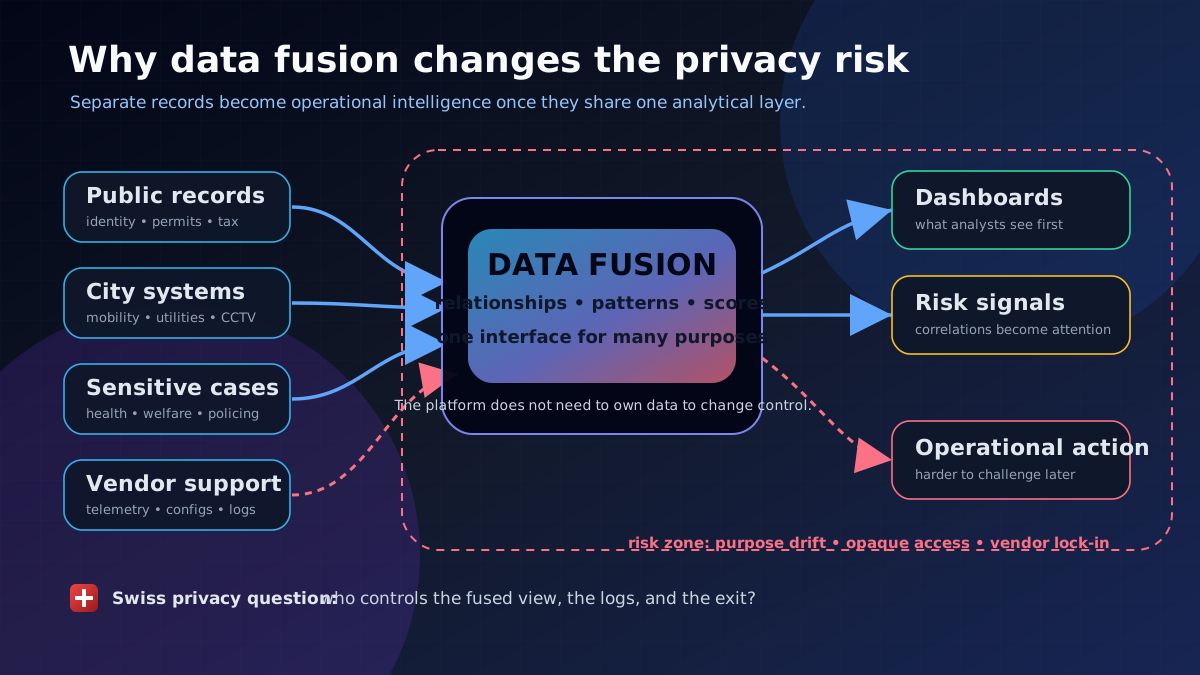
There is a very Swiss reason the Palantir discussion feels uncomfortable: the risk is not dramatic in the beginning. It starts with a tidy procurement deck, a promise to connect scattered datasets, and a reasonable sentence like we only want better visibility.
Visibility is useful. It is also where privacy problems begin if nobody draws the boundaries early. Once a platform can connect case files, identity records, location hints, communications metadata, vendor logs, support tickets, HR data, or public-sector records, the question is no longer simply whether the tool works. The question is what kind of power the data model creates.
A. Start with the report, not the rumour
The recent reporting around Palantir and Switzerland matters because it moved the discussion out of abstract tech politics. The Guardian covered how Swiss journalists investigated Palantir's courtship of Switzerland after the company established a European hub near Lake Zurich, and how that reporting later became legally contentious. Finews had already described the company as unusually sensitive in the Swiss market, with a reputation shaped by security-agency work and by the basic idea of aggregating data from many sources.
Those details matter for PR and compliance teams because they are not just background colour. They tell us what the public will ask next: who is using the system, what data enters it, who can query it, and whether Swiss people can understand what is happening to their information.
B. The FADP issue is purpose creep
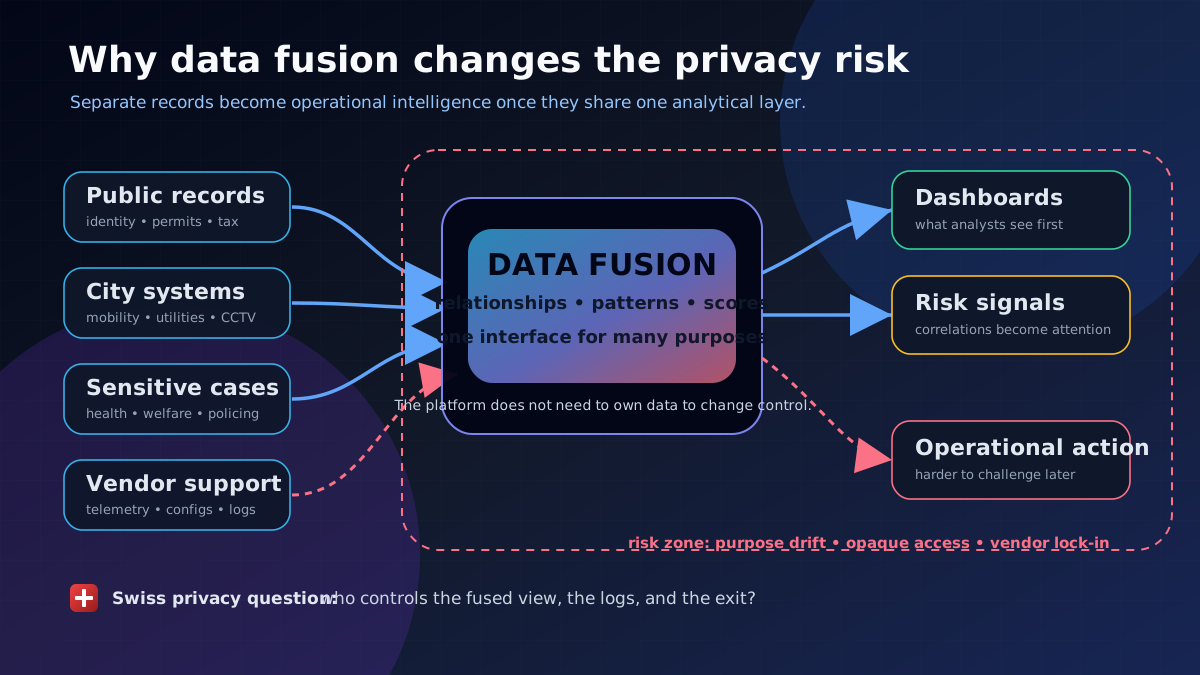
Under the revised Swiss Federal Act on Data Protection, organizations have to be able to explain personal-data processing in plain terms: purpose, proportionality, transparency, security, processors, retention, access, and cross-border transfer. A data-fusion platform puts pressure on every one of those words.
The uncomfortable part is purpose creep. A dataset collected for one operational reason can become useful for a second reason, then a third, then a risk model, then an investigation workflow. Each step may look practical internally. From the outside, it can look like surveillance by accumulation.
C. Zurich should ask boring questions first
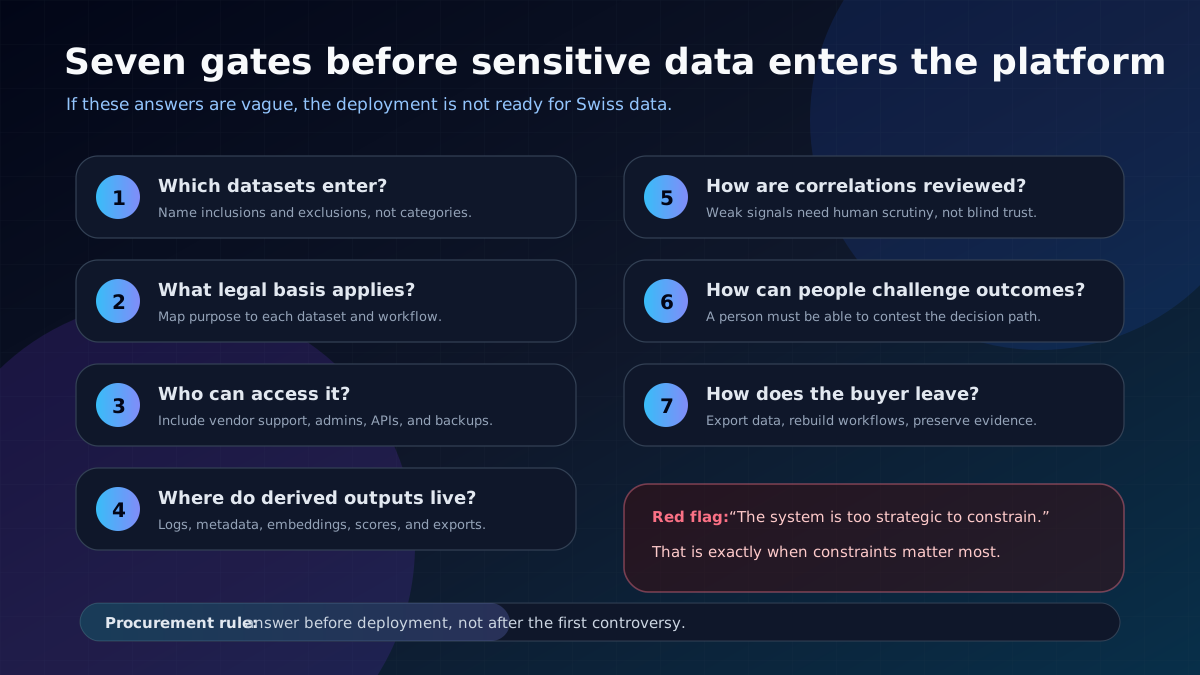
Before any Swiss organization adopts a Palantir-style system, the best questions are deliberately boring:
- Which datasets are in scope, and which datasets are explicitly out of scope?
- Can a person understand why their data appears in a result?
- Who approves new data sources before they are connected?
- Which searches are logged, reviewed, and challenged?
- How long are derived records, risk scores, links, and annotations kept?
- Can the organization leave the vendor without losing auditability?
None of these questions is anti-technology. They are the minimum conditions for using powerful technology without pretending that power is neutral.
D. The PR mistake would be to sound too polished
If a company or authority answers this debate with generic phrases about innovation, efficiency, and responsible AI, people will hear avoidance. The honest answer is smaller and more human: we know this kind of system can create new privacy risks, so here are the limits we put around it before launch.
That is the tone Swiss organizations should use. Not panic. Not marketing. Clear boundaries, published accountability, and a willingness to say no to attractive features when the legal basis or social licence is weak.
E. What good governance would look like
A serious Swiss deployment would need a public data map at the right level of detail, a processor and subprocessor register, access controls that match real job duties, query logging that cannot be edited by ordinary operators, retention rules for both source and derived data, and a tested route for access and deletion requests.
For high-risk use, it should also include human review, independent audit, documented bias testing where decisions affect people, and a clear ban on using the platform as a general-purpose fishing engine. If those controls feel too heavy, that is probably a sign the proposed use case is too broad.
F. The EffuzionGroup view
Our view is simple: Swiss data protection is not a decorative legal layer. It is an engineering and governance discipline. A data-fusion platform can be useful, but usefulness is not enough. The stronger the visibility, the stronger the boundaries must be.
For boards, CIOs, public authorities, and technical teams, the question is not “Palantir or not Palantir”. The better question is: could we explain this system to the people inside it without sounding evasive? If the answer is no, the architecture is not ready.